








The Great Head Shave: Not Just a Bad Hair Day
If you’ve ever caught sight of a monk breeze by—with their scalp shinier than a disco ball and not a hair follicle daring to poke out—you might have asked yourself: Why do monks shave their heads? Is it a protest against split ends, a strategic move to lower their shampoo budget, or perhaps a way to keep cool during heated debates about enlightenment? Spoiler alert: It’s all of the above—and so much more. Get ready for a humorous (though hairless) investigation into the ancient tonsure tradition and why monks become such enthusiastic towel-heads in religious history.
Historical Trends: From Slaves to Saviors, and Monks in Between
Let’s journey back a few millennia, when hair was not just a beauty statement, but a serious signifier of status. According to historians, the practice of tonsure—fancy word for scalp shaving—was first associated with slaves, because, well, nothing says submission quite like losing your luscious locks. In Christianity, some monks shaved their heads to symbolize being “slaves of Christ,” with their buzz-cut forming a ‘monastic crown’ reminiscent of Jesus’ own infamous headgear: the crown of thorns.
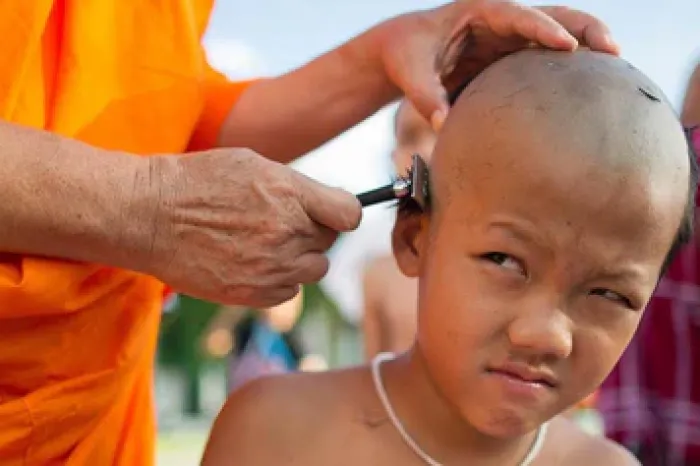
But tonsure wasn’t a Christian monopoly. Far from it! Buddhist monks have been wielding razors since Buddha cut his own princely hair in the mother of all messy breakups with palace life, opting for spiritual bling over slick hairstyles. Disciples followed suit; as records from the Vinaya-pitaka (that’s monk rulebook, not shampoo brand) explain, shaving your head was step one toward enlightenment—preferably with a razor and ideally without a gory Game-of-Thrones-style sword.
By the way, monks aren’t the only follicle-phobes. Tonsure pops up in Hinduism, Islam, and even Judaism—because sometimes, spiritual transformation needs a visible RSVP.
Renunciation: A Bold Style Statement (No Extensions Allowed)
Lest you think monks are just one step ahead of the latest hair trends, the real reason for their baldness runs deeper than the scalp. In Buddhism, for instance, making peace with the razor is a badge of renunciation. It’s a way to say, “I’m done with fashion, ego, and the emotional rollercoaster of wondering if my man bun is still cool.”
Monks let go of their hair—and with it, social status, vanity, and the toxic attachment to looking fly. Long hair, especially in Buddha’s birthplace, India, once signified high-class. By going bald, monks not only ghost their hairstyle fears but also their birth rank, choosing a life of humility and asceticism.
Fashion tip: monks don’t dye, gel, pluck, fluff, or even look at their hair in mirrors (unless emergency dandruff strikes). The rules—laid out in texts like the Vinaya-pitaka—strictly forbid any hair treatment. And for those hoping for a monk-ly grey hair fashion movement? Sorry, greys are left au naturel. Still, monks are probably the only people who literally don’t notice they’re going grey—since mirrors are off-limits unless a medical situation arises.
Symbolism: It’s Not Just About Looking Good Bald
When most people obsess over their hair—should it be curly or straight, brown or platinum, Mohawk or mullet—monks are busy pondering the meaning of life. Shaving the head is a daily, or bi-monthly, ritual (depending on the moon cycle or, apparently, how fast your hair grows). Every swipe of the razor is symbolic; it’s like slicing away confusion, hostility, and attachment—the so-called “three poisonous attitudes” that wreak havoc on your inner peace. Imagine lathering your head and repeating, “Goodbye emotional drama!”
And while hair can be an object of endless fuss for laypeople (seriously, have you seen a toupee commercial lately?), monks say farewell to styling stress and hello to spiritual focus. No more pondering if blonde suits you or fighting the inevitability of baldness after forty—just commit to shaving and use all that freed-up time to meditate, chant, and help the world. Guess you could say, when monks shave their heads, their lives get a close cut to the essentials.
Spiritual Uniforms: Monks, Nuns and the Ultimate Dress Code
If you think work uniforms are strict, step into a monastery. Hair (or its absence) isn’t just about vanity; it helps identify someone as a religious renunciant. Forget trendy undercuts—this is the original sign of belonging to a community that values compassion and discipline over designer looks. Becoming a monk is a personal choice (no one’s ambushing you with razors in the parking lot), but once decided, you wear your spiritual commitment on your scalp.
Donning robes and maintaining a shiny dome, monks visually “go forth” as symbols of peace, humility, and renunciation. It’s a look so iconic, that showing up to a monastery with dreadlocks or a side-part could earn you a gentle rebuke (and maybe some side-eye, minus the eyebrows if you’re in Thailand!).
Speaking of eyebrows: In some Thai traditions, monks shave them off, too. (Presumably, this is so monks can never express surprise at the secrets of the universe.) This practice began with a king’s spy-hunting plot—proving that when it comes to hair, history is as tangled as a bad ponytail.
Modern-Day Monastic Trims: Razors Over Scissors, Please!
No modern gadgets here! While disposable razors have found their way into monasteries, most traditions still favor the classic steel blade—no scissors, no electric trimmers (considered ‘modern heresy’ in some circles—sorry, barbers). Monks shave every full or new moon (Uposatha days), and sometimes more often if they’re feeling especially devout or just follicly challenged.
Lessons in frugality abound; if you’re thinking of shaving your own head monk-style, don’t splurge—grab the cheapest trimmer you can find. And don’t ask your monk friend for combing advice; combs, brushes, and styling products are banned. It’s the one place where your ‘bedhead’ look is elevated to a spiritual height.
Bald but Bold: Friendship, Inner Beauty, and Eternal Wisdom
Ultimately, monks don’t just want to be liked for their smooth scalp or their ability to reflect sunlight. Their goal is to cultivate friendships based on inner beauty—a kind heart doesn’t go grey, wrinkle, or fall out. Relationships founded on hairlessness may be fleeting; those founded on compassion, wisdom, and kindness last through every hair phase (and lifetime).
You don’t have to shave your head to become a more enlightened soul—though the symbolism might pull you away from chasing after wild hairstyles or envying the latest celeb cut. Flipping the script, monks teach us that happiness is found under the skin, not on top of it. So next time your hair won’t cooperate, remember: for some, that’s the point!
Conclusion: When Bald is Beautiful—and Meaningful
To sum up, monks shave their heads for reasons as profound as they are practical, as funny as they are enlightening. It’s not just to save on hair gel or dodge the cost of a barbershop; it’s a ritual deeply embedded in history, spirituality, and the quest for genuine happiness. The next time you see a bald monk—with a gleam in his eye and a shine on his scalp—just know he’s not bald because he lost a bet or missed a hair appointment. He’s bald with purpose, conviction, and a dash of spiritual swagger. Now, pass the razor!