














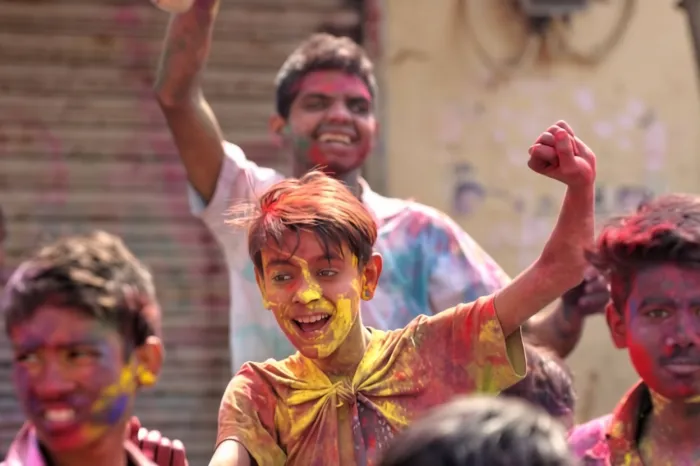
The Holi festival, celebrated across India, remains a vivid expression of faith and community life, drawing people of different backgrounds into its colorful traditions. For centuries, Holi has not only marked the arrival of spring, but also embodied themes of unity, devotion, and joy. Stories and songs from both Hindu and Sufi traditions have long praised Holi, portraying it as a time to come together in happiness, share blessings, and celebrate the triumph of good over evil.
The Bala Kishan Lal Mandir in Begum Bazar, with its history stretching over 500 years, is a prime example of how devotional song and ritual remain at the heart of Holi. During the festival, the temple becomes alive with music and singing, especially the voices of women who gather early in the morning to sing and prepare garlands for the deity. For forty days before Holi, natural colors are prepared for the celebrations, and each day a special offering or “bhog” is made as part of traditional prayers. The community gathers, plays with flower petals and colors, and keeps the atmosphere filled with laughter and spirituality.
Memories of Holi from various cities also illustrate the festival’s power to unite different faiths and communities. In Delhi and Old Delhi, Holi once meant open doors and shared food, with children from all backgrounds mixing together in the joy of throwing colored powders. Songs about love, devotion, and friendship echoed through the streets, and meals were shared across religious lines. Many elders recall a time when Sufi and Bhakti poets would blend their voices, creating songs that lived on in families of every religion.
Over the years, however, some have noticed changes. The spirit of Holi Milan—gathering together—has shifted in some places. People remember celebrations where religious identities faded into the background, with everyone participating regardless of faith. Recent times have seen a more cautious atmosphere and growing divisions. Still, others remain hopeful. They believe in the festival’s power to remind people of a shared culture and to rekindle connections, even if the expressions are quieter now than in decades past.
Even as some traditions change, the core practices continue. At temples like Bala Kishan Lal Mandir, rituals and music keep the heart of Holi beating strong. The enduring devotional songs sung during Holi, the playful throwing of color, and the sharing of simple pleasures offer a glimpse of India’s deep-rooted cultural mix. While challenges exist, voices from different backgrounds still join together during Holi to celebrate unity, faith, and the richness of community life.