














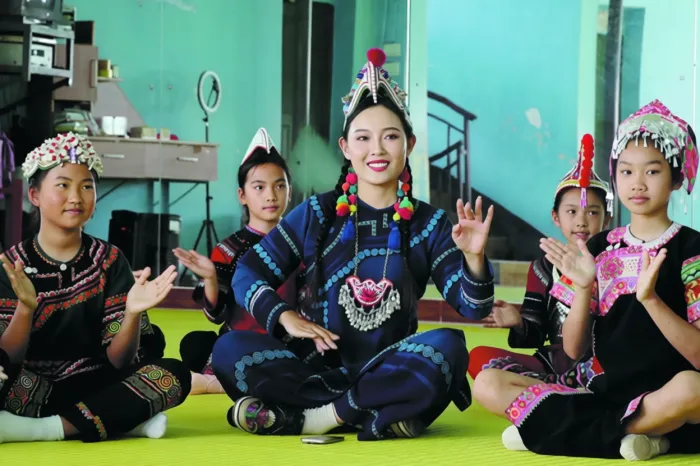
Songs and dances rooted in nature and cultural heritage are finding new life through the efforts of musicians and community leaders determined to preserve their traditions for future generations. In Yunnan province, Yang Yuni, a member of the Hani ethnic group and a representative in China’s top political advisory body, has dedicated herself to maintaining and revitalizing the songs, dances, and crafts of her people. Dressed in brightly patterned traditional attire that symbolizes her reverence for nature and ancestors, Yang uses her position to advocate for the protection of Hani culture both locally and on the national stage.
Growing up among the famous Hani rice terraces, Yang remembers singing folk songs and performing the Lezuo dance around evening fires with fellow villagers. For her, these practices were simply an everyday part of life. It was only after the Honghe Hani Rice Terraces were listed as a UNESCO World Heritage Site in 2013 that Yang realized their cultural importance on a broader scale. However, as recognition for Hani traditions grew, she noticed that fewer young people were engaging with these folk songs and dances—raising concerns that these unique expressions could be lost over time.
In response, Yang established the Yuni Cultural Heritage Center in 2015, a space where local children could learn Hani arts from senior artists. The center started with limited resources but soon overcame obstacles, inspiring over 3,600 students and training more than 20 teachers. Yang also innovated by merging traditional movements with modern styles, such as street dance, to make performances more appealing to younger generations. These efforts—like incorporating Lezuo dance into school exercises and sharing folk arts through digital media—have helped connect the past with contemporary life.
Embracing technology, the center now records and digitally preserves traditional songs and dances, develops AI-designed patterns for costumes, and is exploring robots that can replicate dance steps. Beyond music and dance, the center works to protect crafts like embroidery, bamboo weaving, and pottery, ensuring these facets of heritage are not forgotten. Yang believes weaving cultural education with economic development is the key to sustainable preservation. By combining heritage with tourism, visitors can experience live performances or learn handicrafts, boosting local economies and giving artisans new opportunities.
Across the globe, artists like Connie Dover in the United States also turn to songs about nature and the stories of their homelands to celebrate identity and connect communities. Through folk music and ballads, such performers honor their roots and the landscapes that shaped them, echoing universal themes of reverence for the environment. Together, these cultural leaders highlight the enduring power of music and dance to honor, protect, and carry forward the legacy of nature-inspired traditions.