




















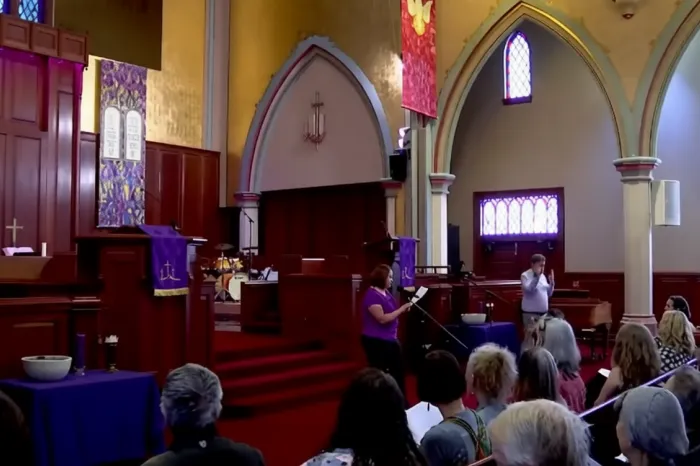
Songs about church continue to play a vital role in worship and religious events, serving as powerful tools for connection, reflection, and peaceful protest. In Salt Lake City, a group called Singing Resistance gathered at First Baptist Church to promote non-violent demonstrations through song ahead of the No Kings rally. This movement, which began in Minneapolis, uses music to unite people and inspire hope amid social challenges. Ana Shaw, a spokesperson for Singing Resistance SLC, explained that their goal is to encourage thousands to join in peaceful singing at protests, offering comfort to those who might otherwise hesitate to participate.
Meanwhile, at the Houston Rodeo, the band Creed delivered a performance that resembled a spiritual revival more than a typical rock concert. Lead singer Scott Stapp addressed the crowd of over 70,000 fans with messages of faith, self-worth, and redemption between their nostalgic hits. Stapp’s reflections on human struggles and divine forgiveness resonated deeply with the audience, who joined in singing anthems like “My Own Prison” and “With Arms Wide Open.” The event highlighted how songs about church and spirituality continue to influence popular culture and bring people together in shared experiences.
In another example of music’s role in religious practice, Holy Trinity Church hosted a Contemporary Stations of the Cross event featuring 16 live songs paired with guided reflections. This candlelit service provided attendees with an immersive experience of Christ’s passion through modern musical interpretations by artists such as Billy Joel and Josh Groban. Musicians from the church enriched the presentation with vocals and instruments including flute, violin, guitar, keyboard, and percussion. The event was designed to make this traditional devotion accessible and meaningful for people from all backgrounds.
Similarly, communities like St. Catharines invite residents to evenings of worship that include testimonies and song. These gatherings emphasize personal stories of faith alongside musical worship, fostering a sense of community and spiritual renewal. Such events show that songs about church remain central not only in formal liturgies but also in broader expressions of faith across diverse settings.
Together, these examples demonstrate how songs about church serve as both a means of worship and a way to promote peace, hope, and unity. Whether through peaceful protests or celebratory concerts, music continues to be an essential element in religious life that uplifts spirits and strengthens bonds among participants.