

















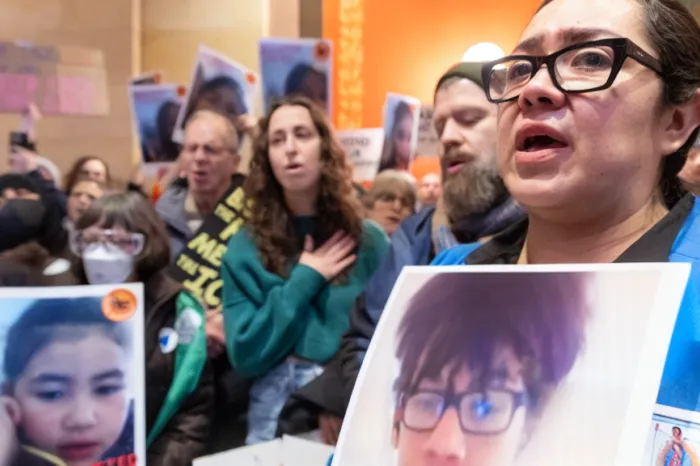
Across the United States, songs about freedom have become vital tools in protest movements, fostering unity and strength among activists. Originating from a deep tradition of music as a form of resistance, recent gatherings in Minnesota and beyond have highlighted the power of collective singing to inspire hope and resilience in challenging times.
The Singing Resistance movement began shortly after a tragic incident involving ICE agents in Minnesota. What started as a small group of individuals walking through affected neighborhoods singing messages of encouragement quickly grew into a nationwide phenomenon with over 230 chapters. These groups gather regularly to sing together at protests, marches, and community events, using their voices to express solidarity and demand justice.
Participants emphasize that skill or experience in singing is not required; the movement welcomes everyone willing to join in song. The act of singing together creates a sense of community and shared purpose, helping people to cope with grief, anger, and fear. Songs like “We get there together or never get there at all” and “Hold on, my dear ones” have become anthems that carry emotional weight and bring people closer.
This tradition of singing as protest has deep historical roots. From African American spirituals like “Go Down Moses” used during the Underground Railroad era to union songs such as “Which Side Are You On?” and civil rights anthems like “We Shall Not Be Moved,” music has long served as a means of embodied resistance. Experts note that group singing disrupts oppressive environments by bringing collective energy into spaces where injustice occurs.
The Singing Resistance draws inspiration from international movements like Otpor in Serbia, which used nonviolent methods including song to oppose dictatorship in the late 1990s. This approach emphasizes inviting those in positions of power to join the cause peacefully rather than confront them aggressively.
Recent high-profile events have showcased the movement’s growing influence. Singer-songwriter Brandi Carlile invited members on stage during a Minneapolis concert to raise funds for families affected by ICE actions, raising $700,000. Folk legend Joan Baez also joined the movement at rallies, reinforcing the longstanding link between music and activism.
Local chapters continue organizing sing-ins at significant sites such as ICE detention centers and businesses supporting immigration enforcement. These gatherings serve both as protests and community-building experiences, reinforcing bonds among participants who share hopes for justice and freedom.
In cities across Minnesota—from Saint Paul to Duluth—groups meet weekly or monthly to prepare songs and organize events. Their efforts demonstrate how music remains a powerful form of peaceful protest that lifts spirits while demanding change. As one leader expressed, the shared voice symbolizes collective strength greater than any individual alone.
Songs about freedom continue to resonate deeply with people seeking social justice today. Through melodies and lyrics passed down through generations or created anew, they unite communities in common cause. This vibrant tradition proves that singing is not just art but also a potent tool for solidarity and resistance.