





















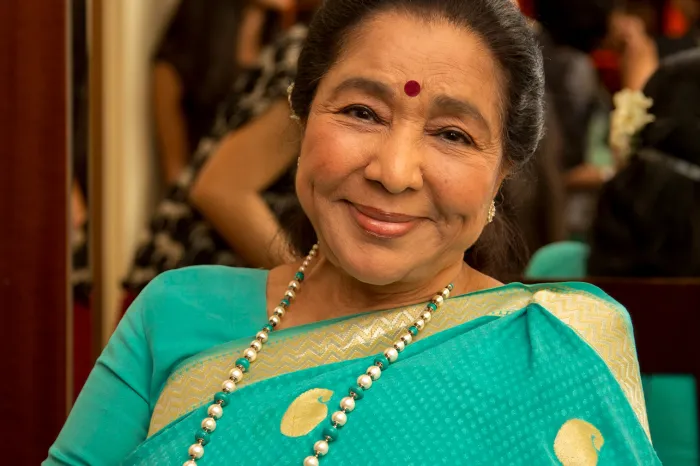
Asha Bhosle, one of India’s most versatile and celebrated singers, passed away recently at the age of 92, marking the end of a remarkable era in Indian music. She was admitted to Mumbai’s Breach Candy Hospital due to cardiac and respiratory complications after months of illness. Alongside her elder sister Lata Mangeshkar, Asha shaped the soundscape of Indian music for decades with their unforgettable voices.
Born into a family deeply rooted in performing arts, Lata Mangeshkar began singing at the age of five and quickly rose to prominence as a leading voice in Indian music. Her younger sister Asha started her career with Marathi songs at age ten before transitioning to Bollywood. Despite their shared background, their journeys took different paths, with Lata initially dominating the industry while Asha worked hard to establish her own identity.
Early in her career, Asha faced challenges due to her voice closely resembling Lata’s. This similarity sometimes caused confusion among listeners and professionals alike. Asha once recounted an incident where a man mistook her sister’s song for hers because records then often did not list singers’ names but only actors’. This early struggle was part of Asha’s journey toward becoming a distinguished artist in her own right.
Asha Bhosle’s rise to fame was marked by her incredible versatility. Unlike Lata’s classical and emotional singing style, Asha embraced multiple genres including classical, ghazals, cabaret, and pop music. This adaptability helped her remain relevant across generations and languages, recording over 12,000 songs in more than 20 languages worldwide. Her international collaborations included work with artists like Boy George and the Kronos Quartet, earning her accolades such as the BBC Lifetime Achievement Award.
Meanwhile, Lata Mangeshkar became synonymous with the golden era of Bollywood music. Her pure classical style and emotional depth defined countless timeless songs that continue to resonate today. Both sisters received numerous prestigious awards—Lata was honored with the Bharat Ratna, India’s highest civilian award, while Asha received the Padma Vibhushan and Dadasaheb Phalke Award for her contributions.
The relationship between these two legendary sisters was complex but deeply influential. While they experienced moments of professional rivalry and personal struggle, their combined legacies have shaped Indian music history profoundly. Asha Bhosle is also noted for being among India’s wealthiest female singers, reflecting decades of success and enduring popularity.
Together, Lata Mangeshkar and Asha Bhosle represent two different yet equally powerful musical legacies. Lata’s mastery of classical singing contrasts with Asha’s wide-ranging experimentation across musical styles. Their stories reveal not only their immense talent but also the perseverance behind their legendary status in India and beyond.