





















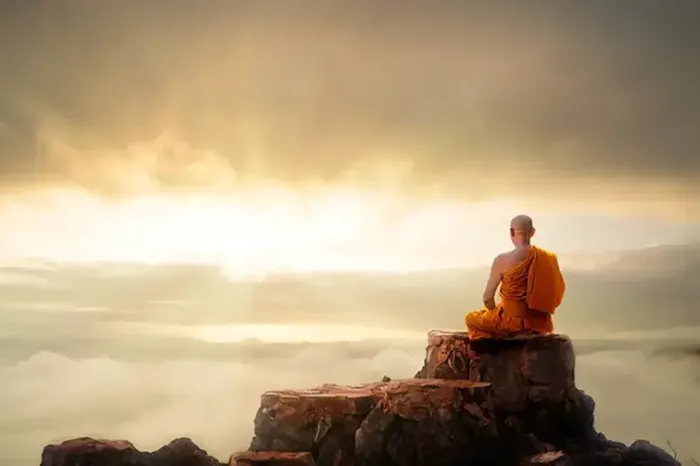
Welcome aboard the Mahayana: The Not-So-Mini Cooper of Buddhism
If you’ve ever pondered the great philosophical questions—Why is life suffering? Why does my Wi-Fi keep dropping?—then you’re already primed for some Buddhist wisdom. Specifically, Mahayana Buddhism, which is essentially the spiritual equivalent of upgrading from a tricycle to a party bus. Strap in; we’re embarking on the wild, compassionate, and slightly perplexing ride that is the Mahayana tradition, with just a dash of humor because, honestly, enlightenment shouldn’t be a dry topic.
Origins: Buddha’s Enlightenment and the Early BMW (Buddhist Meditation Wagon)
Let’s start at the beginning. Once upon a time in ancient India, a prince named Siddhartha Gautama took a detour from royal life and basically invented spiritual existentialism. He realized that life contained suffering (don’t we all), that craving keeps us stuck in the cosmic hamster wheel (thanks, Netflix recommendations), and through the Four Noble Truths and the Eightfold Path, he found a solution. The original recipe was pretty straightforward: meditate, observe, no attachments, be nice. This led to an entire menu of Buddhist schools—some early ones focused on personal liberation, others took things up a notch.
Then came Mahayana, which, from Sanskrit, means “Great Vehicle.” And yes, Mahayana likes to see itself as the minibus that picks up all passengers—no discrimination between monks, laypeople, or those still figuring out how to do downward dog.
The Bodhisattva: Not all Heroes Wear Robes
In the Mahayana universe, the superhero is the bodhisattva. Unlike the arhat—think solo enlightenment influencer—the bodhisattva takes one look at nirvana, says, “Hold my tea, I’ll be right back,” and sticks around to help everyone else get enlightened, too. It’s basically spiritual crowd-surfing—everyone rides together toward awakening.
Bodhisattvas delay their own ultimate liberation so others can hitch a ride out of suffering, which is simultaneously altruistic and slightly masochistic, depending on your view of infinite reincarnation. The logic? If no self is permanent (don’t get too attached to your salad), helping others is helping yourself. Compassion and wisdom—these are your new dual GPS settings.
The Unique Flavor of Mahayana: Contradictions Welcome
Mahayana loves philosophical paradoxes. Emptiness (shunyata)? Check. Interdependence? Check. Cosmic Buddhas, Pure Lands, mind-bending metaphysics, and sometimes, practices borrowed from the yoga aisle. It’s an ocean of thought—sometimes choppy, always deep.
Take the doctrine of emptiness. Everything and everyone—your mind, your mug, your favorite meme—has no stable, intrinsic identity. Mahayana masters didn’t just stop at the self; they expanded this to all phenomena. And if you find that a bit unsettling, don’t worry—Buddhist scholars themselves have bickered endlessly over whether that’s nihilistic or just really, really open-minded.
Of course, then there’s karma—traditionally earned individually. But Mahayana says you can transfer your cosmic reward points to others, kind of like passing on frequent flyer miles to your existentially tired relatives. Got a devotee in a pinch? You can send merit their way. This is illustrated in tales like that of Buddha Amitabha, who offers all who trust in him a seat in his Pure Land, bypassing samsara’s endless spin cycle.
Sutras and Schools: Collect Them All Like Spiritual Pokémon
If you thought the Mahayana vehicle ran only on meditation, think again. Mahayana monks, nuns, and laity are encouraged to study, chant, copy, and worship their vast panoply of sutras (scriptures). Each region where Mahayana took root—China, Japan, Korea, Vietnam—developed its own schools, philosophies, and sometimes, a bit of creative tension with other branches.
Want to meditate until you see the nature of mind? Try Zen (Chan). Prefer devotion? Pure Land Buddhism got you covered. Fancy some philosophical debate? The Madhyamaka school will tie your brain in knots over emptiness and conventional reality.
And if you’re thinking this sounds suspiciously like spiritual shopping, you’re not wrong—but Mahayana argues it’s all skillful means. The Buddha taught different things to different people depending on their capacity. It’s like spiritual Netflix: there’s a show for everyone.
Philosophy: Twists, Turns, and Enlightened Banter
Emptiness, Interdependence, and the Two Truths
Two central Mahayana ideas are emptiness and dependent origination. Nagarjuna, the famous Mahayana philosopher, said you can’t grasp ultimate reality with everyday concepts. Things exist conventionally, but ultimately? They’re empty—like your leftover pizza box, full of possibility but not permanent.
Then comes the doctrine of Two Truths: the absolute (what’s ultimately real) and the conventional (the stuff we agree exists, like coffee shops and deadlines). Mahayana philosophers urge you to master the difference—meditate, develop compassion, and don’t get stuck arguing about whether your thoughts have metaphysical mass.
Notable Mahayana Celebrities
The Mahayana hall of fame includes cosmic Buddhas (Amitabha, Vairocana) and superstar bodhisattvas (Avalokiteshvara, Manjushri, Tara, Kuan Yin). These figures aren’t just distant deities—they’re hands-on spiritual guides, sometimes depicted as wielding enough compassion to fill a cargo plane.
Avalokiteshvara alone appears in countless forms—male in India, female as Guanyin in China, and, according to the Dalai Lama’s sect, as the Dalai Lama himself. Don’t worry, the Mahayana isn’t bothered by shifting identities; it’s pretty on-brand for a tradition that claims reality itself is fluid.
Mahayana Practice: From Meditation to Merit-Making
Mahayana offers a smorgasbord of practices: chanting sutras, bowing before bodhisattva statues, copying scriptures (calligraphy optional but trendy), and reciting the names of Buddhas. You can transfer merit, meditate, or just sit quietly until that ultimate Bodhi moment arrives. And if you forget where you left your wisdom—don’t fret. Mahayana claims it’s nested within you as Buddha-nature (tathagatagarbha), which in the right conditions, sprouts like spiritual chia seeds.
If devotion is your jam, you might aim to land in a Pure Land by faith alone, a kind of cosmic study abroad program where enlightenment is easily within reach. If you prefer to wrestle with paradoxes and zazen, Zen Buddhism will double as your philosophical gym.
Mahayana in the World: Spread, Adapt, Thrive
From ancient India to bustling modern cities, Mahayana hopped transport routes like a spiritual influencer gone viral. In East Asia, monastic rules adapted, laypeople were invited to the party, and new schools popped up to meet changing needs. Today, Mahayana is the world’s most popular form of Buddhism (sorry, Theravada!), with over half its practitioners riding the Great Vehicle across China, Japan, Korea, Vietnam, and the Himalayan regions.
And yes, the Dalai Lama is Mahayana too—often cited with a twinkle in his eye and compassion in his heart, giving Mahayana the best PR team in spiritual history.
Conclusion: The Great Vehicle Means You, Me, and the Cosmic Bus Driver
So what is mahayana in buddhism? It’s the Great Vehicle—a tradition of expansive compassion, innovation, nifty paradoxes, cosmic bus stops, and universal access to enlightenment (no ticket required). It’s profoundly philosophical, gently chaotic, and endlessly flexible. Whether you’re a spiritual sprinter or aspiring bodhisattva willing to stick around till everyone’s onboard, Mahayana has a seat just for you. All you need is a bit of wisdom, a dash of compassion, and maybe a snack—enlightenment is easier to pursue when you’re not hangry.
If all else fails and the philosophy feels like quantum physics, just remember: in Mahayana, not even wisdom is permanent, and Buddha-nature is lurking somewhere beneath your existential dread and Netflix history. Now go practice your paramitas—you never know when you’ll need patience, generosity, or cosmic merit transfer on the journey to awakening.