





















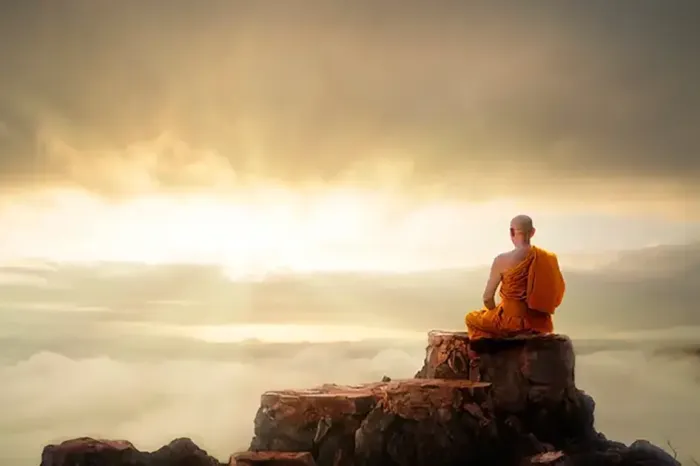
Welcome to the Mahayana Buddhism Express—No Passport Required!
If you have ever wanted to board a spiritual train with unlimited carriages, a dizzying array of snacks, and a conductor who promises enlightenment for all, welcome aboard! Mahayana Buddhism, also known as “The Great Vehicle,” is less a bus and more a cosmic Uber—everyone gets picked up, and nobody gets left behind, no matter how wonky their meditation posture or how much they desperately cling to Wi-Fi. But what exactly is Mahayana Buddhism, and why does a branch with roots in ancient India sound so much like your hipster friend’s latest lifestyle recommendation? Read on, brave traveler. Ridiculous robes are optional.
The Origins: From Palace Pleasures to Pure Lands
Our story stars Siddhartha Gautama—a prince who, after 29 years of living in a palace where disappointment was rarer than a Wi-Fi dead zone, ventured into the world, met old age, disease, death and, for good measure, a wandering ascetic. That’s enough existential angst to make anyone renounce Netflix and pursue enlightenment. Siddhartha left the palace, found the legendary Bodhi tree (not yet on the UNESCO World Heritage list), and sat down with such stubbornness you’d think he was refusing to eat his vegetables. After battling temptation and realizing deep truths—life is suffering, craving causes suffering, suffering can end, and there’s a nifty Eightfold Path to walk—he became the Buddha: the self-aware spiritual hero we all need but don’t always deserve.
Buddhism itself soon grew followers faster than cats amass fans on Instagram. Fast forward a few centuries and Mahayana Buddhism bursts onto the scene like the Avengers in spiritual spandex, bringing fresh ideas and panache to Buddhist doctrine. Instead of just seeking enlightenment for yourself (which is so last season), Mahayana tells you to delay your personal bliss until you can help everyone—including that neighbor who won’t return your lawnmower—reach awakening too. In this way, Mahayana Buddhism truly embodies the phrase, “The more, the merrier.” If enlightenment was a group project, Mahayana would risk losing marks for being “too inclusive.”
What’s So Unique About Mahayana?
If Theravada Buddhism (the other big branch) is the equivalent of solitary study in a silent library, Mahayana Buddhism is a bustling, collaborative hackathon in the spiritual coworking space. Mahayana’s central concept is the bodhisattva—a being who is so filled with compassion and wisdom that they put off their own final exam (nirvana) and stick around to tutor the rest of us lost souls. In other words, they’re like an overqualified teaching assistant who keeps turning up long after tenure.
Mahayana encourages everyone to aim for Buddhahood, not just spiritual elites. If you thought enlightenment was reserved for monks in mountain caves who drink yak butter tea, Mahayana says: “No way! Enlightenment for all—especially you with your soy latte!”
Other headline features include:
- A pantheon of celestial Buddhas and bodhisattvas: Forget one Buddha. Mahayana brings you a cosmic squad, from Amitabha who promises a Pure Land hotel for devoted fans, to Avalokiteshvara, who listens with empathy unmatched by your therapist. Zen, Pure Land, and Tantric traditions (hello, Vajrayana!)—all are Mahayana cousins, each with their own brand of wisdom and quirky rituals.
- Emptiness (Shunyata): Mahayana loves paradox. Everything is empty yet everything exists on the basis of everything else. If you thought quantum physics made your brain hurt, philosophers like Nagarjuna have been blowing minds for over 1,800 years with the radical claim: nothing has a fixed essence. And if you’re confused, congratulations—you’re on the right track!
- Skillful Means: The Buddha isn’t above using wild stories to teach you something. Parables like burning houses, magical carriages, and more are all for the greater good—enlightening confused mortals with tailored wisdom.
- Transferable Merit: In Mahayana, good karma isn’t just yours. You can send spiritual points to loved ones—like Venmo for enlightenment! Stories of the Buddha, like Amitabha’s Pure Land, show how faith and compassion can literally change your cosmic address.
Core Teachings: The Six Perfections and a Net of Jewels
Want to be a Mahayana superstar? Start racking up the Six Perfections (paramitas): generosity, discipline, patience, energy, meditation, and wisdom. Level up these virtues, and you’re well on your way to bodhisattva status. Some schools toss in extra goodies like vows, skillful trickery (upaya), spiritual power, and even mind-bending knowledge.
Philosophically, Mahayana presents dazzling theories:
- Madhyamaka (Middle Way) philosophy insists all phenomena are empty and ultimately convention. It’s the intellectual equivalent of discovering your favorite TV show was just a simulation.
- Yogacara (Mind-Only) school says all experiences are mental, a concept that predates social media algorithms by centuries.
- The metaphor of Indra’s Net: Imagine reality as a gigantic cosmic fishnet festooned with infinite diamonds, all reflecting each other—no separate self, just glittering interdependence. It’s less solitary monk, more cosmic LinkedIn.
Bodhisattvas: The Ultimate Team Players
Remember that Mahayana is all about community spirit. The bodhisattva role is open to everyone, regardless of haircut, dietary preferences, or previous lifetime experience. These heroes take vows to help others, undergo a series of spiritual stages (the bhumis), and, in a perfect world, defect from the solo player mode to multiplayer co-op.
Avalokiteshvara (Guanyin in China), Manjushri, Tara—these are Mahayana’s superheroes, venerated across temples for wisdom, compassion, and a willingness to help you with everything from test anxiety to existential crises.
Practices: From Meditation Marathons to Chanting Sprints
Mahayana Buddhism is not just intellectual chin-scratching. It’s meditation, chanting, visualization, and bodhisattva vow recitation. Practitioners might chant the Lotus Sutra, visualize the Buddha in Pure Lands, or copy sacred texts by hand (the original mindful coloring book). Pilgrimages, rituals, merit-making, generosity—these are not just chores, but rocket boosters to awakening.
If you ever see Buddhist monks copying hundred-thousand verse scriptures, building enormous statues, or chanting the names of bodhisattvas in marathon sessions, don’t be alarmed. They’re just racking up cosmic frequent flyer miles, one mantra at a time.
Mahayana in the Modern World: From Ancient India to Instagram Stories
The Great Vehicle didn’t just hitch a ride along the Silk Road; it established itself across Asia—China, Japan, Korea, Vietnam, Mongolia, and Tibet (where it picked up some tantric turbo-chargers and became Vajrayana). Today, Mahayana temples dot cities from New York to Tokyo. Zen, Pure Land, Humanistic Buddhism, and other traditions blossom everywhere, from serene gardens to downtown apartment blocks.
And let’s not forget Mahayana’s impact on pop culture, psychology, and modern mindfulness. The radical ideas of emptiness and the absence of fixed self have filtered into stress reduction programs, sitcoms, and philosophical debates about whether your smartphone is really, truly, lasting—or just emptiness in disguise.
In Conclusion: All Aboard, All Included
Mahayana Buddhism may have roots in ancient India, but it is as lively as a morning in Manhattan. Its teachings on compassion, emptiness, and community resonate with everyone, from solitary introverts to social butterflies. If you want a philosophy that’s profound, paradoxical, and promises spiritual group hugs, Mahayana might just be your ticket. So grab your metaphorical robe, raise your aspiration to be helpful (maybe return that borrowed lawnmower), and let the Great Vehicle take you on its never-ending ride—to the awakening of one and all.