
















Music has long served as a source of strength and comfort during times of hardship, a truth vividly demonstrated by former hostages from Gaza and musicians supporting victims of the ongoing conflict. These individuals have found in songs a powerful way to endure suffering, express emotions, and foster resilience.
Several ex-hostages who endured captivity in Gaza have recently shared how certain songs helped them survive their darkest moments. Pianist Alon Ohel, for instance, often hummed or tapped melodies like Bill Withers’ “Ain’t No Sunshine” and Yehudit Ravitz’s “Song Without a Name,” which took on profound significance in the bleak conditions of captivity. Sagui Dekel-Chen recalled mentally playing love songs such as “Keren Shemesh” (Sunbeam), a favorite of his young daughter, as a source of hope.
Kan 88 radio station has launched a special Passover series titled “Free Choice,” hosted by former hostages Guy Gilboa-Dalal, Amit Soussana, and Yarden Bibas. Each host curates three hour-long programs featuring songs that held deep personal meaning before and during their imprisonment. Yarden Bibas shared how music was a refuge after his family was tragically torn apart by the October 7 Hamas attack. He buried his wife and children in 2025 while listening to heavy-metal ballads that had been part of their life together, highlighting how music helped him process grief.
Similarly, Guy Gilboa-Dalal, captured at a desert rave and released in late 2025, expressed how music transcended lyrics to convey meaning. He asked fellow released captives to deliver specific songs to his family members still waiting for freedom. Amit Soussana, who bravely resisted her captors during abduction, also contributes to the radio series by hosting her own program.
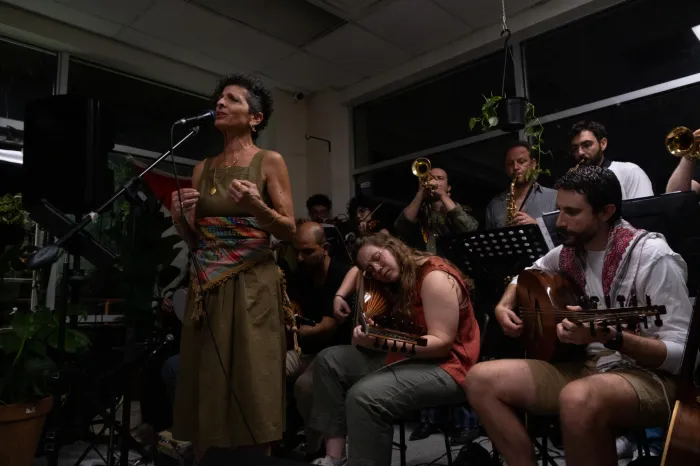
Beyond individual stories, the Viva Palestina Orchestra in Austin has used music to support Gaza victims since October 2023. This group of local musicians has raised over $100,000 for humanitarian causes through performances featuring traditional Palestinian resistance anthems. Their repertoire includes songs like “Asfour,” which tells the story of a sparrow fighting for freedom. Lead vocalist Julie Slim described these as songs filled with strength, resilience, hope, and grief simultaneously.
The orchestra’s members bring personal connections to these songs; Sari Andoni grew up in Bethlehem during the first intifada and learned to play the oud, an ancient string instrument central to Palestinian music traditions. Their concerts often end with a dabke dance medley that invites audience participation, fostering community and healing through shared cultural expression.
Despite political challenges that have discouraged some university students from participating due to fears over dissent, the orchestra continues its mission. Upcoming performances aim to keep spirits high amid ongoing turmoil. Joshua Thomson, a saxophonist with the group, emphasized that music remains vital in Gaza today as it has been historically.
Together, these stories from former hostages and dedicated musicians illustrate how songs about strength can provide hope and healing even under the most difficult circumstances. Music remains a universal language that helps people endure pain, remember loved ones, and unite communities in times of crisis.