



















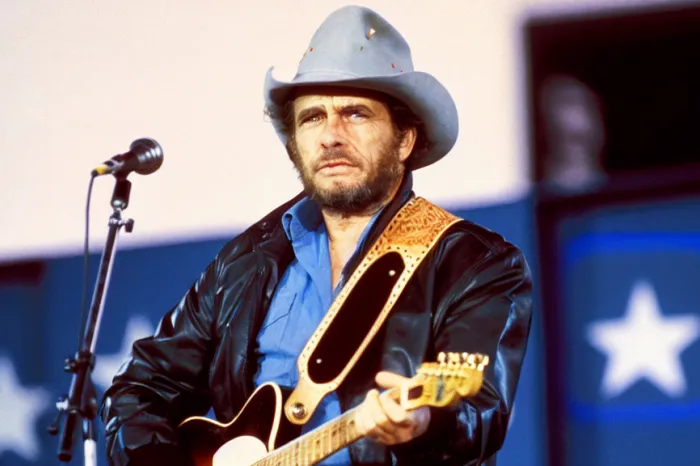
Merle Haggard’s 1975 hit “Always Wanting You” stands out not only as a chart-topping country song but also as a deeply personal tale of forbidden love. The song reached number one on the Billboard Hot Country Singles chart, marking Haggard’s 20th No. 1 hit and continuing his remarkable success during the 1970s. However, beyond its commercial triumph, the song carries a poignant story inspired by Haggard’s unrequited feelings for fellow country music star Dolly Parton.
During the mid-1970s, both Haggard and Parton were married to other people, yet Haggard developed strong romantic feelings for her while they worked together. Although he expressed his emotions openly, Parton made it clear that a relationship could not happen. This real-life tension is reflected in the song’s restrained and subtle delivery, which conveys longing without overt dramatics. The lyrics capture the quiet pain of a love that must remain unfulfilled.
Haggard himself revealed in his memoir “Sing Me Back Home” that he once sang “Always Wanting You” to Parton over the phone late at night, hoping to change her mind. While this gesture did not lead to a romance, it became a memorable moment in country music lore. The song’s emotional depth resonates because it transforms a personal experience into a universal story of desire and restraint.
By the time “Always Wanting You” topped the charts in April 1975, it marked Haggard’s sixth consecutive number-one hit, solidifying his status as one of country music’s most influential voices. His ability to blend personal stories with relatable themes helped make his music timeless. Listeners can still feel the authenticity in his voice and lyrics decades later.
The theme of forbidden love is common in popular music, often exploring complex emotions tied to relationships that cannot be realized due to social or personal barriers. Songs like Haggard’s remind audiences how music can express deep human experiences with honesty and subtlety. “Always Wanting You” remains a powerful example of how artists use their craft to share moments of vulnerability that resonate across generations.
As listeners revisit this classic track, it continues to evoke the bittersweet nature of longing and unfulfilled love. Merle Haggard’s work not only shaped country music but also offered a window into the human heart, showing that some stories—especially those about forbidden love—are timeless and universally understood.