

















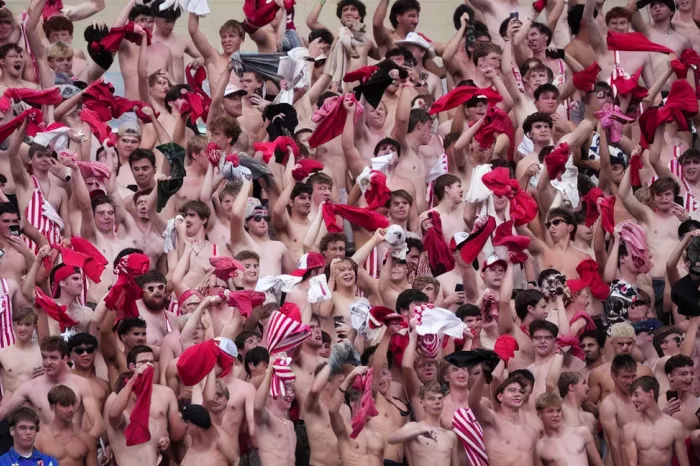
College football stadiums across the United States remain vibrant hubs of tradition and energy, largely thanks to the enduring presence of fight songs and popular stadium anthems. While modern pop songs have found their way into game day playlists, classic fight songs still hold a special place in the hearts of fans, alumni, and players alike. These tunes serve as rallying cries that unite crowds and honor decades of football history.
Among the most celebrated fight songs are Michigan’s “The Victors” and Notre Dame’s “Victory March,” both recognized for their deep roots and wide recognition. Michigan’s anthem was penned in 1898 by a music student named Louis Elbel after a significant win, capturing the spirit of victory with the famous line, “Hail! Hail! to Michigan, the champions of the West!” Meanwhile, Notre Dame’s song, created by brothers Michael and John Shea in 1908, gained renewed fame through its inclusion in the film “Rudy,” symbolizing pride and perseverance.
Other notable fight songs include USC’s “Fight On,” written in 1922 by students Milo Sweet and Glen Grant, as well as Oklahoma’s “Boomer Sooner” and Wisconsin’s “On Wisconsin.” These songs share common themes such as university pride, exclamations, and togetherness. According to sports management experts, these elements help evoke strong emotional connections among fans who learn these songs from childhood and pass them down through generations.
In recent decades, alongside traditional fight songs performed live by marching bands, stadium anthems from various music genres have become part of the college football experience. Songs like House of Pain’s “Jump Around” at Wisconsin have energized crowds for over thirty years. Others include Garth Brooks’ country hit “Callin’ Baton Rouge” at LSU, The Killers’ “Mr. Brightside” at Michigan, Tom Petty’s “I Won’t Back Down” at Florida, and “Shout” at Oregon. These tracks often serve as modern rallying points that complement the time-honored fight songs.
Garth Brooks himself designed “Callin’ Baton Rouge” with stadium energy in mind, aiming to ignite enthusiasm among fans during games. When LSU plays it, thousands respond loudly to the song’s lyrics, creating a communal experience that feels like a war cry. Similarly, fans at many schools contribute their own chants or altered lyrics to these anthems, adding personal flair to their traditions.
Despite technological changes such as piped-in music replacing some live band performances during timeouts, many players and fans emphasize the unique atmosphere created by live fight songs. Michigan backup quarterback Davis Warren highlighted that while modern songs add excitement, it is the traditional fight songs sung after victories that truly embody the spirit of college football.
Overall, fight songs and stadium anthems continue to be essential components of college football culture. They provide continuity amid change, connecting past generations with present-day fans while amplifying the passion that makes college football Saturdays unforgettable.