















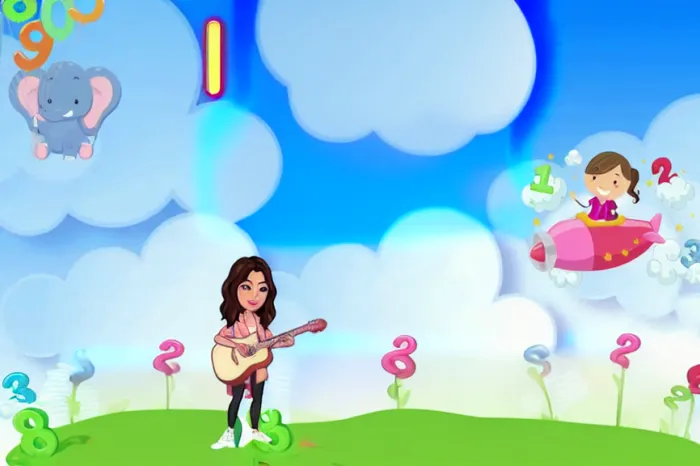
In Oklahoma City, an innovative approach to teaching mathematics is gaining attention as students learn math through music instead of traditional memorization techniques. Niah Spriggs, an African American educator, has released a new album titled “Multiply the Beats: Math That Moves,” designed to help students grasp multiplication and number patterns by engaging with rhythm and repetition.
This project is supported in part by a grant from the American Rescue Plan Act (ARPA), provided by the Oklahoma County Commissioners. The funding reflects a community effort to enhance student learning by supporting creative educational methods. Spriggs’ album is available on multiple platforms such as YouTube, Apple Music, and Amazon Music, making it accessible to a broad audience.
The core idea behind this method is to teach children how numbers relate and connect by using music to highlight patterns like multiples and skip counting. Instead of forcing students to memorize facts, they learn through hearing and repeating these patterns in song form. Research from the Stanford Center for Education Policy Analysis indicates that early math skills are strong predictors of academic success, even more so than early reading skills.
According to Spriggs, many students struggle with math not because they lack ability but because they do not see the connections between numbers. When students listen to music that emphasizes number patterns, they start to understand how these patterns work mathematically. In classrooms where this method is used, students actively participate by singing, counting aloud, and identifying sequences within the songs.
The songs cover important foundational math skills such as recognizing multiples, practicing skip counting, understanding number sequences, improving multiplication fluency, and building a base for division, factors, and fractions. By reinforcing these basics through music, students develop greater confidence and accuracy when solving math problems.
This musical teaching strategy focuses on comprehension before memorization. It helps children move from simply recognizing patterns to gaining true fluency in mathematics. Additionally, parents and educators can access instructional videos on YouTube that demonstrate how this technique is applied in real classroom settings.
To celebrate this innovative approach, a community event for students and their families will be held on June 6. This gathering aims to highlight how music can make learning math more enjoyable and effective. With ongoing concerns about student performance in mathematics nationwide, this approach offers a promising tool for building strong numeracy skills and boosting confidence among young learners.
Niah Spriggs currently leads the I Believe Learners Academy and the Scholars Circle Community Tutoring Program in Oklahoma City. Her work focuses on helping students develop a deep understanding of numbers through pattern recognition supported by music. The “Multiply the Beats” project represents a broader commitment to improving math education by showing students how numbers grow and connect in meaningful ways.