







Songs about mathematics have emerged as a powerful educational tool, helping students grasp complex concepts through music and creativity. Across various classrooms and online platforms, educators and creators are using math-themed songs to make learning more engaging and memorable. This approach gained particular attention during the COVID-19 pandemic, when traditional in-person instruction faced unprecedented challenges.
One notable example is Nate Melbourne, a middle school math teacher with over a decade of experience. When schools shifted to remote learning in 2020, Nate began producing math parody songs to maintain connection with his students. Drawing inspiration from his college professors who championed making math real-world, authentic, and entertaining, he created videos that combined humor, rap, and educational content. His parodies, such as “Math Hurts” and “Teacher,” resonated with students and parents alike, providing moments of joy and learning during difficult times.
Beyond individual teachers, playlists curated from various songs about mathematics offer diverse ways to explore numerical concepts through music. Songs like “I Can Add” by They Might Be Giants introduce basic arithmetic to young children in a fun and accessible way. For older students, tracks such as Kate Bush’s “Pi,” which recites the mathematical constant to many decimal places, or Jonathan Coulton’s “Mandelbrot Set,” which celebrates fractal geometry, highlight the beauty and complexity of mathematics.
Music also serves as a bridge between math and art. The relationship between musical notes and mathematical ratios dates back centuries to Pythagoras’ discoveries about sound frequencies. Modern musicians continue to explore these connections, crafting songs that weave mathematical themes into their lyrics and compositions. For instance, Linda Perhacs’ “Parallelograms” playfully repeats geometric shape names, while electronic artist BT’s “Fibonacci Sequence” references the famous number pattern found in nature.
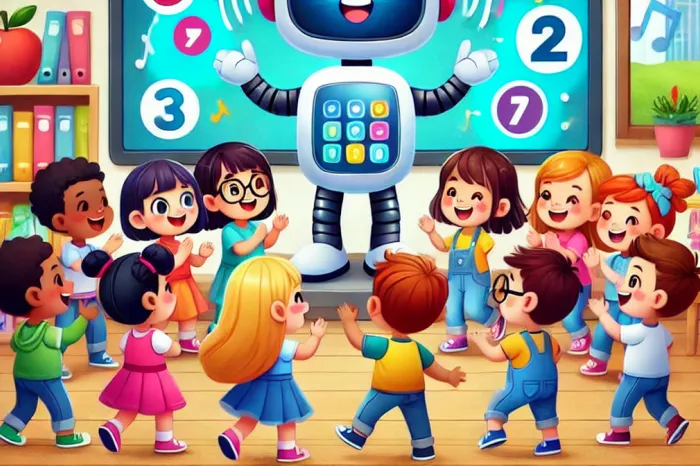
Recently, advances in technology have expanded this creative frontier. Artificial intelligence (AI) is now being harnessed to compose educational songs tailored for children’s learning needs. This innovative use of AI helps produce catchy tunes that simplify math concepts and encourage early engagement with numbers.
Overall, songs about mathematics serve not only as instructional aids but also as tools for emotional connection and motivation. They help demystify math by presenting it in relatable contexts and encourage students to view themselves as capable mathematicians. Educators emphasize that while these songs do not replace traditional teaching methods, they complement them by making learning enjoyable and fostering a positive attitude toward math.
As educators continue to experiment with combining music and math education, playlists featuring songs about mathematics are gaining popularity among teachers, parents, and students worldwide. This trend highlights the enduring power of music to enhance understanding and inspire learners across all ages.