

















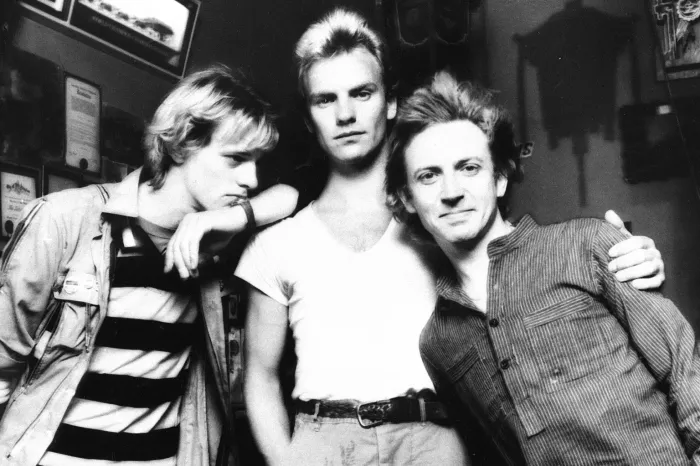
The Police, formed in 1977 by Sting, Stewart Copeland, and Andy Summers, stand as one of the most influential rock bands to emerge from the late 20th century. Their unique blend of rock, reggae, and punk elements helped redefine popular music and left an enduring mark on the genre. Known for chart-topping hits like “Every Breath You Take,” “Roxanne,” and “Message in a Bottle,” the trio captured the energy of their era while appealing to diverse audiences worldwide.
Sting, originally named Gordon Sumner, was the band’s lead vocalist and bassist, contributing thoughtful lyrics that often explored complex themes such as obsession, social issues, and alienation. Stewart Copeland’s drumming incorporated jazz and world music influences, adding rhythmic complexity that set the band apart. Andy Summers’ distinctive guitar work introduced echoing riffs that gave The Police a signature sound. Together, they moved from street performances in London to global stardom.
Their debut album, Outlandos d’Amour, released in 1978, introduced audiences to their edgy style with tracks like “Roxanne,” which combined reggae rhythms with punk energy—a bold choice for its time. Following albums like Reggatta de Blanc and Zenyatta Mondatta further solidified their reputation with hits such as “Message in a Bottle” and “Don’t Stand So Close to Me.” These songs not only climbed international charts but also received heavy rotation on emerging platforms like MTV.
The Police’s 1981 album Ghost in the Machine delved into deeper themes including technology’s impact on society and political conflict, while their 1983 release Synchronicity became their commercial peak. Featuring mega-hits such as “Every Breath You Take,” Synchronicity won multiple awards and sold millions of copies in the United States alone. Despite their success, tensions within the band led to their breakup in 1984 at the height of their popularity.
After disbanding, each member pursued individual careers—Sting achieved success as a solo artist and actor; Copeland composed film scores; Summers explored jazz and photography. The band reunited briefly for tours in 1986 and more extensively in 2007-2008, rekindling fan enthusiasm but without new recordings. Their influence continues to resonate through artists across genres who sample or draw inspiration from The Police’s sound.
The Police’s legacy is evident not only in their enduring popularity on streaming platforms but also in how they helped shape the rock genre’s trajectory. Their fusion of styles opened doors for future musicians to experiment beyond traditional boundaries. As debates around who created rock and roll persist, The Police’s innovative contributions highlight how collaborative creativity can redefine music history. Their story is a testament to how three friends from London transformed rock music forever.