





















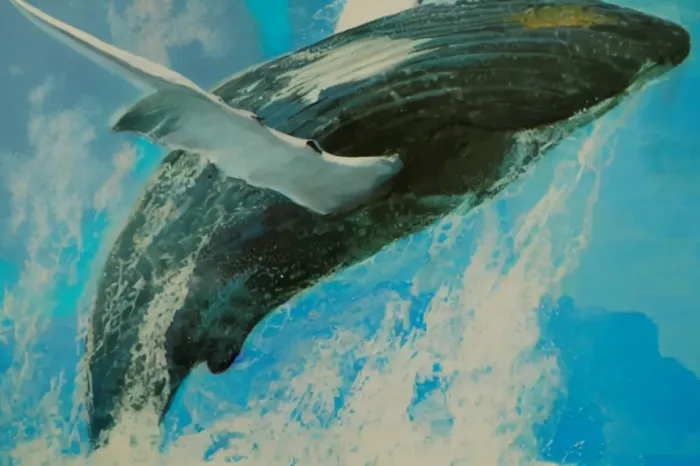
Whale songs have captivated listeners for decades, blending natural mystery with profound cultural and environmental significance. Originating from the haunting vocalizations of humpback whales, these songs have inspired both scientific discovery and artistic expression, shaping how humans perceive marine life and their own connection to nature.
The landmark album “Songs of the Humpback Whale,” released 55 years ago, remains the bestselling environmental recording ever. Compiled by bioacoustician Roger Payne, this five-track collection introduced millions to the complex and melodic sounds of whales. Payne’s work was groundbreaking; it revealed that these ocean giants were not merely making noise but were singing intricate songs that could last for hours. This discovery helped fuel the Save the Whales movement during a time when commercial whaling threatened humpback populations with extinction.
Beyond conservation, whale songs have had a lasting influence on music and popular culture. Artists such as Pete Seeger and Kate Bush found inspiration in these ethereal sounds, incorporating their themes into folk and experimental music. The album’s track “Three Whale Trip” is noted for its eerie beauty, evoking both intimacy and otherworldliness. These recordings invite listeners to immerse themselves in an underwater soundscape that is both alien and deeply emotional.
The fascination with natural soundscapes extends beyond whales. In the mid-20th century, recordings of frogs, birds, rain, and ocean waves also gained popularity. Albums like “Sounds of North American Frogs,” released in the 1950s by herpetologist Charles Bogert, attracted a cult following despite their scientific origins. Such nature recordings became tools for education, relaxation, and meditation well before digital apps popularized these uses.
Scientific efforts continue to deepen our understanding of whale communication. Recent projects like Project CETI (Cetacean Translation Initiative) employ advanced AI and robotics to decode sperm whale vocalizations known as codas. Researchers hope to unlock the complexities of whale language, potentially revealing insights into intelligence and social bonds among marine mammals. This emerging science underscores the importance of listening carefully to whales rather than attempting premature communication.
The cultural allure of whale songs also speaks to a broader human need for connection with nature amid increasingly urbanized environments. Studies show that exposure to natural sounds can reduce stress, lower blood pressure, and improve mood. Many turn to recordings of whale songs or ocean waves as a refuge from city noise, seeking calm and mental restoration.
While recorded nature sounds provide comfort, experts emphasize that nothing replaces direct experience with wild environments. Acousticians like Gordon Hempton stress that recordings are invitations to visit nature rather than substitutes for it. The legacy of whale songs lies not only in their beauty but also in their power to inspire conservation awareness and remind humanity of its place within the natural world.
As whale songs continue to echo through music halls and scientific labs alike, they remain symbols of hope and interspecies connection. Their enduring presence in culture highlights how listening closely can foster empathy for creatures beyond our own species and encourage efforts to protect fragile ocean ecosystems.