















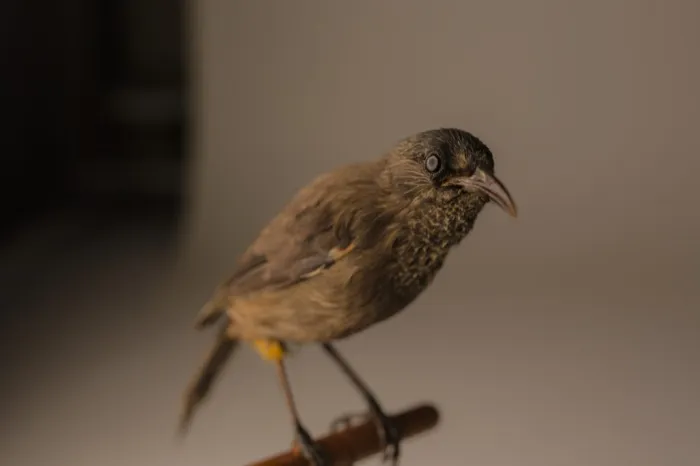
The Kauaʻi ʻōʻō, a small Hawaiian bird now extinct, is remembered not only through stories but also through its last known recorded song. This unique recording provides a rare chance to hear the voice of a species that vanished in the wild decades ago. The Kauaʻi ʻōʻō was a black-feathered bird about eight inches long, with yellow feathers on its legs. It lived on the Hawaiian island of Kauai and fed mainly on flowers, using its specially adapted tongue to reach nectar.
The bird was first declared endangered in 1967 by the U.S. government. Despite efforts to protect it, the Kauaʻi ʻōʻō was last seen in the wild in 1985, and by 2000 it was officially declared extinct by the International Union for Conservation of Nature (IUCN). However, the final chapter of this bird’s story includes a remarkable audio recording made in 1986 by ornithologist Jim Jacobi. He recorded the call of a captive Kauaʻi ʻōʻō, capturing what might be the last sound this species ever made.
For many years, this recording remained largely unknown until 2022 when Hannah Hunter, then a PhD candidate at Queen’s University in Ontario, rediscovered it during her research on extinct animal sounds. She described listening to the recording as a moving experience, saying it feels as though one is hearing the very last bird alive. The sound is haunting and beautiful, serving as both a tribute and a warning about the fragile state of many animal species.
The story of the Kauaʻi ʻōʻō highlights broader issues related to extinction caused by habitat loss, disease, and human impact. This bird’s song is now part of public archives where anyone interested can listen and reflect on what has been lost. It reminds us of the importance of preserving wildlife and protecting endangered species before they disappear forever.
Beyond its scientific value, this recording has cultural significance for Hawaiians and nature lovers worldwide. It connects listeners to an extinct species in a way that photographs or descriptions cannot. The Kauaʻi ʻōʻō’s final melody encourages ongoing efforts in conservation and offers hope that technology can help keep memories of extinct animals alive.
As we listen to this rare song, it is clear that every species plays an important role in our world’s ecosystem. The loss of even one can leave a silent gap that echoes through time. The Kauaʻi ʻōʻō’s voice may be gone from the forests of Kauai, but thanks to this recording, its legacy endures as a powerful reminder of nature’s delicate balance.