




















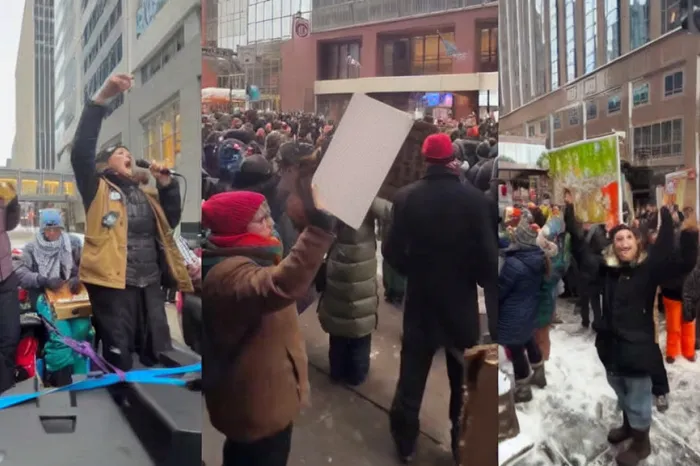
In recent years, songs about teaching and social protest have played a powerful role in uniting communities and inspiring change. One notable example is the viral scene in Minneapolis, where thousands gathered to sing “It’s okay to change your mind” outside a hotel housing Immigration and Customs Enforcement (ICE) agents. This song, created by local activist Annie Schlaefer and promoted by the group Singing Resistance, serves as a call for compassion and courage, inviting ICE officers to reconsider their roles amid controversial immigration enforcement.
The song’s simple yet heartfelt lyrics—”It’s okay to change your mind / Show us your courage / Leave this behind”—have resonated deeply with protesters and supporters alike. These musical gatherings are part of a broader tradition of using song as a teaching tool and method of peaceful resistance. Organizers emphasize that through singing, communities can express grief, demand justice, and foster solidarity without resorting to violence.
Annie Schlaefer has been leading community singing circles for over a decade across northern Minnesota, Maine, and Wisconsin. Her work focuses on creating accessible songs that are easy to learn and sing together. The protest song “It’s Okay to Change Your Mind” is just one of many she has crafted to support social movements addressing issues like immigration raids and authoritarian violence.
This approach draws inspiration from historic civil resistance movements such as Otpor!, the Serbian group that helped overthrow Slobodan Milošević in 2000. Otpor! activists used similar songs to encourage police officers to abandon oppressive orders and join peaceful protests. The legacy of these songs shows how music can serve as a bridge between opposing sides, encouraging dialogue instead of conflict.
In Minneapolis, Singing Resistance has compiled a public digital songbook containing various songs tailored for different protest contexts—including walking vigils, grief gatherings, and calls for defections. Other contributors include local musicians like Sarina Partridge and Joshua Blaine. These songs are taught across faith groups and communities nationwide, highlighting music’s universal role in education and activism.
The movement plans a nationwide day of song to amplify their message further. Organizers stress that music helps overcome fear, connect people emotionally, and strengthen collective resolve. In times marked by escalating violence against marginalized communities, singing becomes both an act of resistance and healing.
Through these efforts, songs about teaching extend beyond traditional classrooms into the streets where social justice is pursued. They educate participants about history, encourage empathy, and inspire peaceful action. This growing use of protest music illustrates how teaching through song remains a vital strategy for building inclusive movements dedicated to change.