











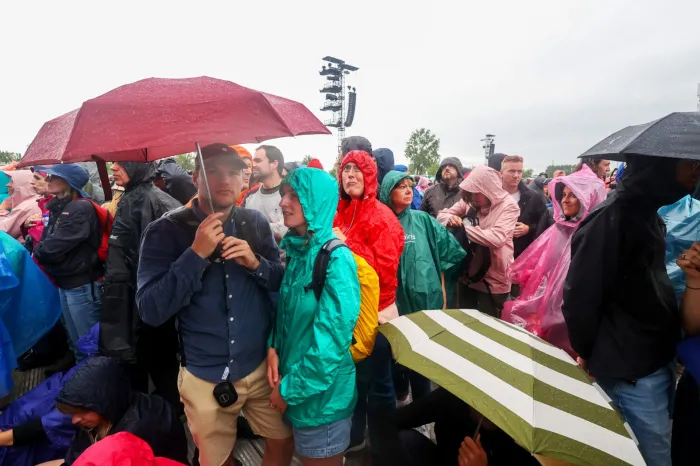
Country music artist Zach Bryan recently encountered public criticism after ending his concert early in Lincoln, Nebraska, due to dangerous weather conditions. The 30-year-old singer was performing as part of his “With Heaven on Tour” when a lightning storm forced him and his crew to stop the show prematurely on a Saturday night. Bryan cut the final six songs from his setlist to ensure the safety of his fans and crew, citing the fast-approaching lightning as the main reason for the decision.
Bryan addressed the situation on social media the following day, sharing a photo showing a lightning bolt directly above the open-air stage. He apologized for shortening the performance but emphasized that safety concerns made it necessary. “Lightning came in fast! We only missed the last six! I love you guys, the rain was a blast,” he wrote, trying to maintain a positive tone despite the disruption.
However, some concertgoers were disappointed by the abbreviated show. One fan expressed frustration online and requested partial refunds, arguing that the missed songs and opening act by Kings of Leon affected their experience. The attendee also raised concerns about safety during what they described as a rushed entry process. Bryan responded dismissively to this complaint, calling it a “Karen ahhhh tweet,” which sparked further debate among fans and observers.
The Lincoln incident was not an isolated case for Bryan. Earlier in April, he was forced to cancel a full concert in Tulsa, Oklahoma, because of severe weather threats. That Tulsa show was fully refunded and rescheduled for the next night, contrasting with the partial performance in Nebraska. Whether any refund requests would be honored for the Lincoln concert remained unclear at the time.
Experts in music and entertainment recognize that weather disruptions at outdoor events are often unavoidable. Malcolm Abram, a writer for cleveland.com, noted that artists cannot control natural forces like lightning storms. He emphasized that audience safety must come first, even if it means cutting shows short or canceling them entirely. However, Abram also criticized Bryan’s response to fan complaints as somewhat insensitive given the circumstances.
Weather-related interruptions have impacted many concerts across genres and locations. For instance, notable artists like John Legend and The Cure have faced cancellations or delayed starts due to severe weather conditions at outdoor venues. Such events highlight how unpredictable weather remains a major challenge for live performances.
The situation with Zach Bryan’s Nebraska concert underscores ongoing tensions between fans’ expectations and practical safety measures during outdoor music events. While fans look forward to complete shows featuring their favorite songs—including popular tracks themed around weather—the reality is that unpredictable conditions sometimes force difficult decisions by performers and organizers.
As live music continues to thrive outdoors worldwide, managing weather risks remains essential for ensuring both enjoyment and safety. Artists like Zach Bryan must balance their commitment to fans with responsible actions when storms threaten. This balance will likely continue to shape concert experiences in the future.