











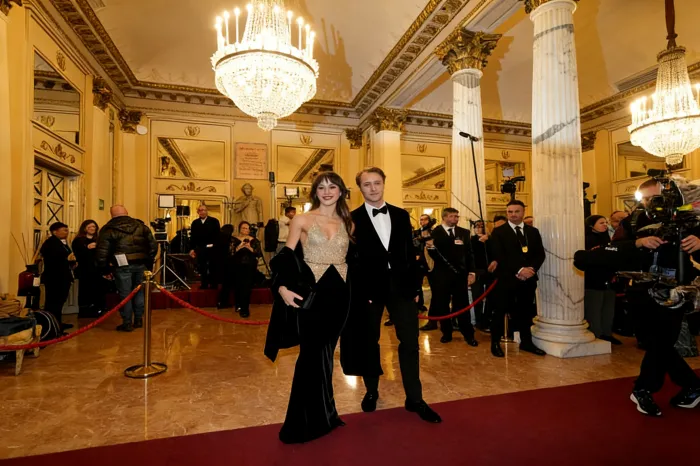
Art, as we know, has always been the world’s luckiest escape artist from the paradoxical shackles of politics, and nowhere is this more humorously on display than Milan’s Teatro alla Scala on the night of its latest season premiere. With all the drama normally reserved for the stage, this year’s gala spotlighted Dmitry Shostakovich’s “Lady Macbeth of Mtsensk”—a Russian opera dusted off from political blacklist status and thrust smack into the spotlight. The choice of Russian repertoire, for the second time since Moscow’s 2022 invasion of Ukraine, could’ve been a delicate tap dance between diplomacy and diva.
Opera in the Crossfire: Staging Culture Amidst Politics
Imagine: Europe’s cultural glitterati, business tycoons, and ever-watchful politicians arrive, expecting to see high notes and dramatic turns unfold on stage—not outside in the square. But instead of thrown tomatoes and picket signs, this time a flash mob emerges, waving the banner of peace rather than outright protest. Only in Italy do demonstrations come with choreography and a flair for the theatrical.
La Scala’s music director Riccardo Chailly—no stranger to tiptoeing over hot coals—confronts the challenge head-on. Having previously staged “Boris Godunov” during tense times, the maestro now helms “Lady Macbeth” for only the fourth time in the theater’s long, storied history. In a twist worthy of its own libretto, protesters are relocated behind City Hall—perhaps the only gated community that’s become a refuge for political dissent.
Staging Shostakovich: Liberty, Tragedy, and Maybe Just a Little Murder
Shostakovich composed “Lady Macbeth of Mtsensk” in 1934, only to see it blacklisted by Stalin two years later—a bit of opera history as dramatic as the plot itself. The show exposes the abuse of power and the resilience of individuals in the face of political repression, making it as relevant today as in the shadowy days of the Great Purge. The Italian party +Europa lead the charge outside, insisting that culture not become collateral damage in battles for ideological one-upmanship.
On the inside, American soprano Sara Jakubiak makes her La Scala debut as Katerina—a role that’s demanding, dangerous, and, apparently, very high-pitched. “You go, ‘Oh my gosh, how will I do this?’” Jakubiak marvels, as she prepares to belt out no fewer than forty-seven high B flats (the musical equivalent of running a marathon with a mouthful of confetti).
Chailly, with a grin and a metaphorical citrus squeezer, jokes about “getting the juice” out of Jakubiak—while the creative teams swarm around, layering text, music, and rhythm over several cups of Italian espresso as tradition demands. Stage director Vasily Barkhatov, meanwhile, sets the opera not in the 19th century countryside, but in a cosmopolitan Russian city at the end of Stalin’s regime—a creative license that places existential repression next to Art Deco wallpaper.
The Eternal Tug-of-War: Is Art Above Politics, or Just Really Good At Ducking?
La Scala’s new general manager, Fortunato Ortombina, defends the tradition of programming Russian operas with gusto. “Music is fundamentally superior to any ideological conflict,” he declares, possibly with an arched eyebrow and the subtle suggestion that even Putin must respect Shostakovich on a good day.
Yet, even as culture and politics duel, the Ukrainian community sits this one out, opting for peace over protest, and perhaps mindful of last year’s controversy where separation of politics and culture seemed about as plausible as a soprano singing low C. Still, the choice resonates for those who see “Lady Macbeth” as a veil lifted on personal and political turmoil—proof that not all Russian exports require a passport and security clearance.
Season Premieres and the Stage’s Global Draw
While political tensions give La Scala’s gala a distinctive edge, other season premieres across the globe serve as a reminder of the draw and drama inherent in launching a new chapter. Take the thrilling post-apocalyptic escapades of “Fallout” or the bunker-busting suspense in Hulu’s “Paradise.” These shows remind us that, whether in the opulent halls of Milan or in streaming’s wild wasteland, a premiere is never just about curtain calls—it’s about society wrestling with uncertainty, chaos, and occasionally, a singing murderess.
Opera and television alike leverage the season premiere as an excuse for anticipation, speculation, and ultimately, communal catharsis. In Milan, that catharsis comes with arias and orchestras; in streaming land, it’s episode drops and trailer breakdowns. But whether fighting for freedom, searching for lost loved ones, or simply surviving Deathclaws, the premiere is a cultural heartbeat—sometimes rhythmic, sometimes erratic, but almost never boring.
Curtain Call: Laughs, Gasps, and Just Enough Satire
As history will record, Milan’s La Scala didn’t shy away from staging the emotive, controversial, much-debated “Lady Macbeth of Mtsensk”. The audience went “for the ride,” as Jakubiak says, enduring high notes, tragic arcs, and the delicate political tightrope walk demanded of the age.
At the end of the evening, the opera’s message transcended the tension. For one gala night, luminaries and ordinary fans alike celebrated art’s ability to provoke, challenge, and entertain. And if anyone was still searching for protest banners amidst the flash mob, they likely left with a renewed belief that, when all else fails, there’s always room for opera—and maybe, just maybe, a diplomatic encore.