



















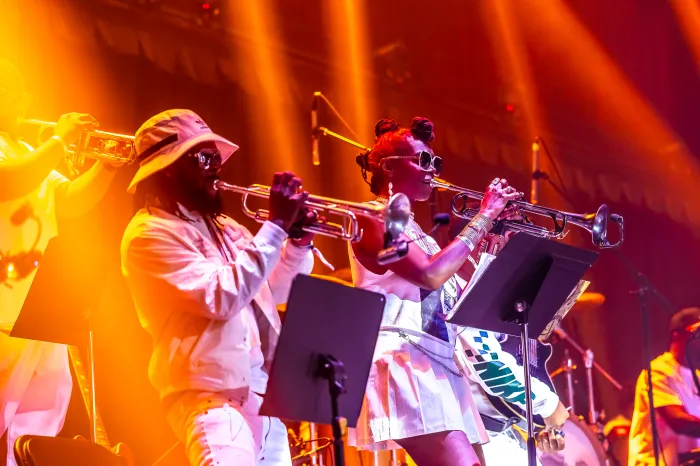
Orchestra Noir, an all-Black orchestra based in Atlanta, is transforming how audiences experience early 2000s hip-hop and R&B by reimagining these genres through classical music. Founded by Jason Ikeem Rodgers, who holds three classical music degrees and has a background teaching in Philadelphia schools, the orchestra challenges the traditional boundaries of classical music spaces by bringing culturally representative performances to diverse audiences.
Rodgers’ vision was shaped by his experiences growing up in North Philadelphia and navigating predominantly white academic environments while pursuing his classical music education. He recognized a lack of representation for Black culture in classical music and aimed to create an ensemble that operates independently from conventional systems. Since its launch in 2016, Orchestra Noir has gained national recognition for its innovative approach, performing sold-out shows across major cities including Houston, New York, and Los Angeles.
The ensemble’s Culture 2000 Tour highlights the sophistication and emotional depth of hip-hop and R&B classics by arranging them for orchestral performance. Rodgers emphasizes that this music is not only foundational to Black identity and culture but also musically complex. By stripping down these popular records and rebuilding them with orchestral instruments, Orchestra Noir invites audiences to reconnect with this era of music in a fresh yet familiar way.
Beyond just musical reinterpretation, Orchestra Noir carefully designs every aspect of their concerts—from the repertoire to audience engagement—to ensure authenticity and inclusivity. Rodgers points out that many traditional classical venues struggle to attract Black audiences because they fail to tell stories that resonate with those communities. Orchestra Noir fills this gap by creating spaces where Black excellence and cultural pride are celebrated without compromise.
The orchestra’s success demonstrates a growing appetite for genre fusion that honors cultural roots while expanding artistic expression. Collaborations with prominent entities like Atlantic Records and appearances on platforms such as The Tonight Show have further elevated their profile. Rodgers envisions expanding Orchestra Noir’s reach beyond touring, aiming to establish it as a lasting institution promoting Black joy and creativity through orchestral music on a national and international scale.
In cities like Baltimore, where audiences already have deep connections to hip-hop culture, Orchestra Noir’s performances are seen as affirmations rather than introductions. The enthusiastic reception affirms the orchestra’s mission to remove barriers between traditional classical music and communities historically excluded from such spaces. As Rodgers looks ahead, he remains committed to building a legacy that redefines what it means to be both an orchestra and a cultural movement.