














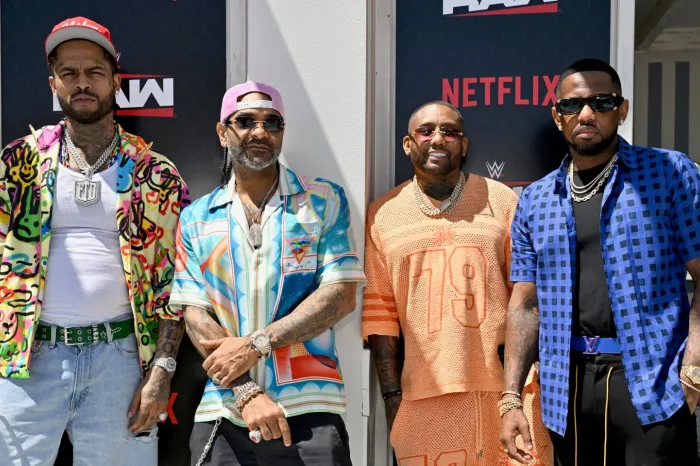
The ongoing partnership between WWE and the hip-hop community continues to make waves in 2026, blending entertainment genres to engage wider audiences. Despite recent criticisms of WrestleMania 42’s lackluster matches, the event’s highlight was arguably a memorable moment involving hip-hop artist Cam’ron and WWE star Jey Uso. This incident, which unfolded during Cam’ron’s podcast recording, drew significant attention and underscored the growing influence of hip-hop within the wrestling world.
WWE has been facing challenges with declining viewership, partly due to shifts in streaming platforms. To counter this trend, the wrestling organization has increasingly collaborated with hip-hop artists and personalities. Figures such as Cam’ron, Joe Budden, and Lil Yachty have taken active roles in WWE promotions and content creation. Billboard reports that this strategy is helping WWE stay relevant by tapping into hip-hop’s cultural energy and fanbase.
Former WWE Women’s Champion Jade Cargill expressed enthusiasm about this collaboration, noting that many successful Black podcasts have helped increase WWE’s visibility. She emphasized her desire to expand the company’s Black fanbase and highlighted the potential for growth through these cultural connections. “Anything that we put our hands on turns to gold,” Cargill said, reflecting a positive outlook on the fusion of wrestling and hip-hop cultures.
The relationship between WWE and hip-hop is not new but has intensified recently. Last year, rapper Travis Scott made headlines by supporting WWE superstar Cody Rhodes during a storyline event. This year, Lil Yachty made his WrestleMania debut by accompanying wrestler Trick Williams to the ring and playing a part in Williams winning the WWE United States Championship from Sami Zayn. Sources close to the event revealed that Yachty’s genuine passion for WWE was a key factor in his involvement.
This collaboration offers mutual benefits: WWE gains fresh energy and cultural relevance, while hip-hop reaches audiences who might not typically engage with its music or lifestyle. Industry observers see this as an evolving partnership that will likely deepen over time. As WWE continues integrating hip-hop elements into its business model, fans can expect more innovative crossovers between music and wrestling entertainment.
While the full extent of future collaborations remains uncertain, it is clear that hip-hop culture plays an important role in shaping WWE’s current identity. The fusion between these two vibrant worlds highlights the question often posed in cultural discussions: is hip hop a culture? This ongoing partnership between WWE and hip-hop underscores how music and sports entertainment can unite to create new forms of popular culture that resonate with diverse audiences worldwide.