

















Dr. Maren Haynes Marchesini, a multifaceted musician and scholar, serves as the director of worship and music at Hope Lutheran Church in Bozeman, Montana. Her extensive background includes roles as a choral director, cellist, composer, and vocalist, alongside scholarly work in ethnomusicology. In a recent interview with the hosts of “Sounding Board,” a program by the Presbyterian Association of Musicians, she shared insights into her journey and her passion for participatory worship music.
Raised in the Presbyterian Church with strong family ties to church music, Haynes Marchesini’s path was shaped by early exposure to faith-based musical traditions. After completing her undergraduate studies at Whitworth University and serving as a Young Adult Volunteer, she pursued graduate studies that led her to work at a Lutheran church while completing her doctorate. Her dissertation involved studying a Seattle megachurch, but her career has since embraced a diverse range of musical leadership roles.
Her interest in ethnomusicology—the study of music within its cultural and social contexts—has taken her around the world. She has engaged with communities in Kazakhstan, the U.S.-Mexico border region, Guatemala, and Israel-Palestine. These experiences deepened her understanding of how music intertwines with identity, spirituality, and justice. She highlighted the influence of activist musicians like Bobby McFerrin in shaping her approach to community-building through music.
Haynes Marchesini also discussed how improvisation has influenced her musical style and spirituality. Initially trained on the cello, she later embraced improvisation through jazz and worship bands. She described worship music settings as ideal environments to experiment due to their simpler structures. This freedom allows musicians to engage in spontaneous dialogue and creativity that transcends ego and rational thought. For her, this improvisational spirit reflects a deeper spiritual experience where the “Spirit carries me” beyond logical reasoning.
At Holden Village, a remote Lutheran retreat center in Washington state, Haynes Marchesini has participated in artistic residencies that explore intersections between music, theology, and social justice. There she connected with John Hermanson’s liturgical compositions focused on themes like justice and renewal. She emphasized that churches must continue to expand their musical horizons without discarding valuable traditions.
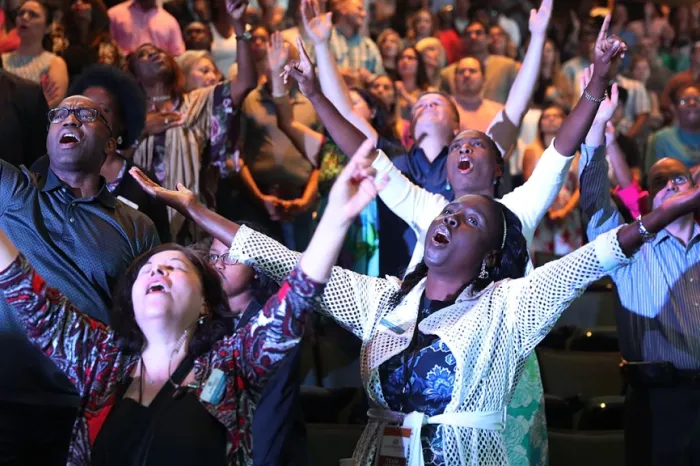
A key part of Haynes Marchesini’s philosophy is promoting participatory worship music over purely presentational styles. Drawing from traditions such as Son Jarocho—a communal Mexican folk music style—she advocates for inclusive singing where everyone is invited to join regardless of skill level. She notes that churches often lag behind other communities in adopting this approach but stresses that worship is about collective joy rather than perfection.
She actively encourages leaders to model songs confidently so congregations can learn quickly and participate fully without reliance on soloists or leaders. Haynes Marchesini supports initiatives like Music That Makes Community which foster shared leadership and spiritual connection through communal song-sharing. She describes witnessing transformations among participants as one of the most rewarding aspects of leading worship.
In summary, Dr. Maren Haynes Marchesini’s work underscores the importance of inclusive, participatory worship music in building vibrant church communities. Her blend of scholarly insight and practical leadership invites churches to embrace music not just as performance but as a shared spiritual practice that fosters connection, justice, and joy.