





















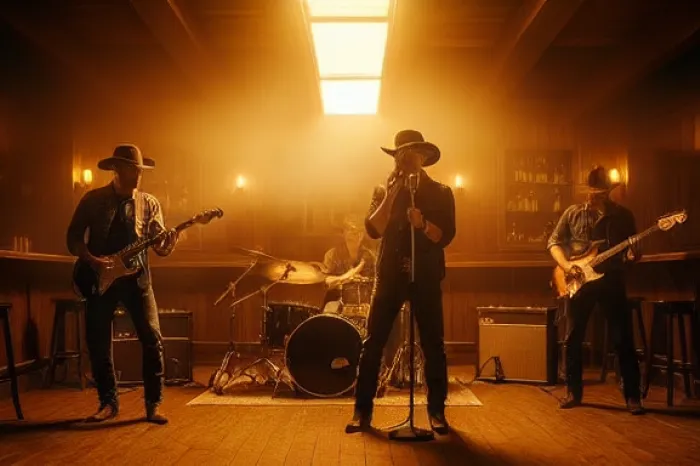
Country rock music has long been a genre where artists blend the storytelling charm of country with the energy and edge of rock. Recently, notable figures in the entertainment and music world have highlighted their unique relationships with country rock, showcasing both an embrace of the genre’s roots and a clear distinction from it.
Billy Bob Thornton, known primarily as an actor and star of the series “Landman,” has revealed a surprising new chapter in his artistic career. According to recent reports, Thornton has been writing a significant number of country songs, marking a fresh creative direction. Though he grew up immersed in rock ’n’ roll, Thornton found himself naturally drawn to country songwriting, collaborating with friends like Mark Collie. Their joint effort produced “Midnight After Midnight,” featured on the soundtrack for “Landman.” Thornton shared that he has written between 18 to 20 songs, many poised for recording on various country albums.
Thornton’s approach to country music leans heavily toward traditional styles rather than modern trends. He expressed his preference for the old-school country sound inspired by legends such as Waylon Jennings and Johnny Cash. His critique of contemporary country is pointed; he described modern country music as “Def Leppard with a steel guitar,” suggesting that today’s country often resembles pop more than its roots. Despite this, his enthusiasm for collaboration with other country artists is growing, signaling a promising future for his contributions to the genre.
In stark contrast, the late David Bowie, a monumental figure in rock history, maintained a clear boundary from country music throughout his career. In a 2002 interview with NPR, Bowie candidly admitted that he never engaged with country music either as a listener or an artist. While many of his contemporaries—such as Bob Dylan and The Rolling Stones—experimented with country sounds at some point, Bowie chose not to explore this path. He explained that his musical interests were broad but excluded country and Western genres.
Bowie’s artistic style was known for its theatricality and poetic ambiguity, which did not align well with the straightforward storytelling nature of popular country music during the 1970s and 1980s. Instead of adapting to prevailing trends or revisiting traditional genres, Bowie stayed true to his unique creative vision. His refusal to “go country” exemplifies how artists can evolve while remaining authentic to their personal tastes and artistic goals.
The contrasting approaches of Billy Bob Thornton and David Bowie highlight the diverse ways musicians interact with country rock music today. Thornton’s enthusiastic adoption and songwriting within the genre reflect an ongoing revival of traditional country influences blended with rock energy. Meanwhile, Bowie’s steadfast avoidance underscores how genre boundaries can shape an artist’s identity.
Country rock continues to evolve as artists bring their own perspectives and influences into the mix. With stars like Thornton embracing classic sounds and crafting new material, fans can look forward to fresh contributions that honor the genre’s rich heritage. At the same time, understanding why some iconic musicians like Bowie never ventured into country offers insight into the complex relationship between personal style and musical evolution.
As listeners explore some of the best country rock songs spanning decades—from timeless classics to contemporary hits—the genre remains a vibrant space where tradition meets innovation. Whether through heartfelt storytelling or energetic performances, country rock’s enduring appeal lies in its ability to adapt while staying true to its roots.