




















Scientists have made a groundbreaking discovery revealing that the clicking sounds produced by sperm whales share remarkable similarities with human speech. For many years, these rhythmic clicks, known as codas, were thought to be simple communication signals or mysterious ocean noises. However, recent research led by Project CETI, a U.S.-based initiative focused on decoding sperm whale communication, suggests these sounds form a highly complex system resembling elements of human language.
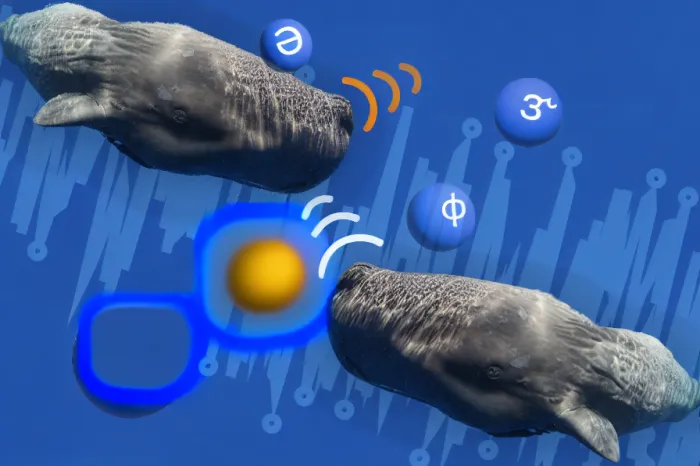
The research team collaborated with the University of California, Berkeley, analyzing thousands of whale codas recorded over several years in the Eastern Caribbean. They identified two distinct types of clicks, named a-codas and i-codas, which resemble human vowel sounds in their acoustic structure. The a-codas contain one formant frequency, while i-codas have two, creating variations similar to how vowels function in spoken language. This discovery indicates that sperm whales may use a flexible and sophisticated sound system with phonetic properties akin to human speech.
Moreover, the study revealed that these clicks do not occur randomly but follow patterns comparable to phonological rules found in human languages. Like vowels blending in speech to create new sounds, whale codas influence each other when overlapping, suggesting an advanced level of vocal interaction. Individual whales also seem to have unique rhythms and styles when producing codas, hinting at personalized or identity-specific communication within their social groups.
While scientists are cautious about labeling this system as a true language due to the current lack of understanding of its meaning and syntax, the parallels with human speech are striking. The findings challenge previous assumptions that whale vocalizations were simple signals and open up possibilities that sperm whales possess a sophisticated communication method previously unrecognized.
To deepen this understanding, Project CETI is employing machine learning technologies to analyze extensive recordings of whale sounds. This approach aims to detect patterns at scales beyond human capability and may eventually help decode the meanings behind the clicks. Success in this endeavor could revolutionize our comprehension of animal intelligence and communication, potentially bridging the gap between humans and another intelligent species.
This research not only sheds light on sperm whale behavior but also marks a new chapter in studying animal communication globally. By applying similar methods to other species, scientists hope to uncover more complex vocal systems and enhance conservation efforts through better understanding of animal social interactions. As we continue exploring these underwater conversations, the possibility of communicating directly with whales moves closer from science fiction to scientific reality.