




















Songs about work have long served as more than just musical expressions; they are vital cultural records that reflect the lived experiences of labor, environment, and social life. In many parts of the world, especially among women, work songs carry deep insights into environmental changes and the challenges faced by communities. These songs are often tied to repetitive tasks such as grinding grain, planting, or fishing, and they encode knowledge about seasons, weather, and social relationships.
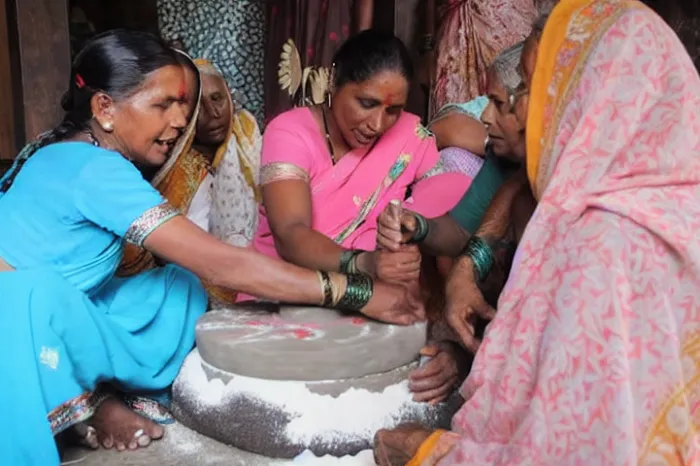
In rural western India, for example, women like Anusuyabai Pandekar and her daughter-in-law Mandabai once sang beside stone grindmills. These songs accompanied labor that is now disappearing due to mechanization and environmental shifts. The melodies capture the rhythm of work that no longer happens as frequently and also reflect changes in climate and agricultural patterns. While official climate data focus on numbers like rainfall and emissions, these women’s songs tell stories about how climate change is experienced through daily labor and survival.
The Grindmill Songs Project has collected tens of thousands of these traditional songs, preserving voices often missing from formal records. Through this archive, researchers have traced how droughts and water scarcity affect women’s work routines, family dynamics, and community life in sugarcane farming regions. For instance, sugarcane—a water-intensive crop—is a recurring symbol in these songs, representing not only agricultural labor but also domestic struggles such as marriage pressures and economic hardship.
Similar traditions exist globally. In West Africa and Malawi, women’s work songs express communal efforts during farming or famine while also conveying a deep sense of social obligation and spiritual connection. On the Swahili coast, fishing songs teach weather patterns and coordinate collective labor at sea. In the Caribbean and Latin America, work songs preserve histories of colonial labor systems and environmental vulnerability.
These songs do more than accompany work; they organize it and embed knowledge about survival strategies under changing conditions. They reveal how environmental stress is intertwined with social relations, gender roles, and economic realities. Importantly, these songs were not created to document climate change but emerge naturally from the lived experience of labor tied closely to land and water.
However, the spaces where such singing thrived are diminishing due to mechanization and shifting social practices. As collective labor decreases, so does the tradition of singing together during work. This decline threatens not only cultural heritage but also a unique form of environmental knowledge that complements scientific data by highlighting human experience behind statistics.
Listening to these work songs offers a richer understanding of climate change impacts. They show how environmental shifts reshape labor demands on women, increase burdens at home and in fields, and affect community resilience. Recognizing this perspective broadens climate conversations beyond abstract figures to include voices historically overlooked in policy-making and research.
In sum, songs about work represent powerful cultural archives that link labor with environmental change across diverse regions. Preserving and valuing these traditions can deepen our awareness of how climate crises are lived daily by those most affected.